Speed Truth Part 3 of 5
How to train the hip flexors
Date: August 15, 2026
As you apply force into the ground (Part 1) and use your backside to propel yourself forward (Part 2), your hip flexors then absorb among the most force of any muscle group in your body. This is logical, since they’re the muscles most responsible for picking up your legs.
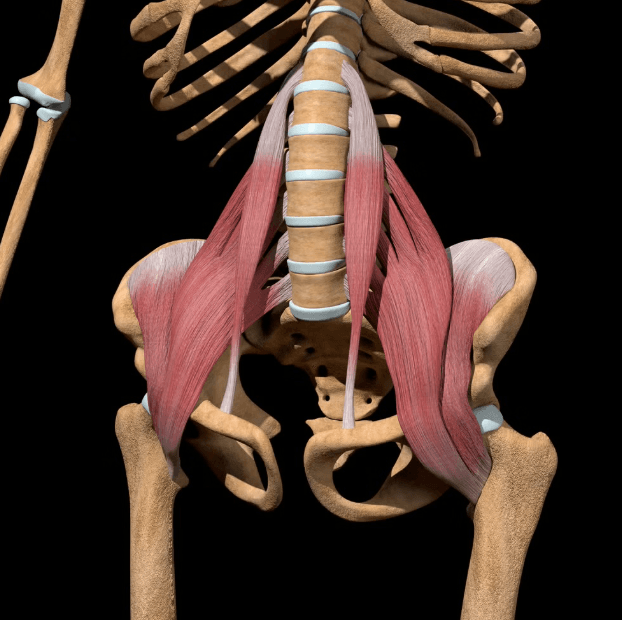
The first problem is the rarity of measurable strength training to support this.
A solution common in gyms is using the lying hamstring curl machine, but sitting down, pulling the roller pad onto your knees (I use the same setting as I do for hamstring curls)…
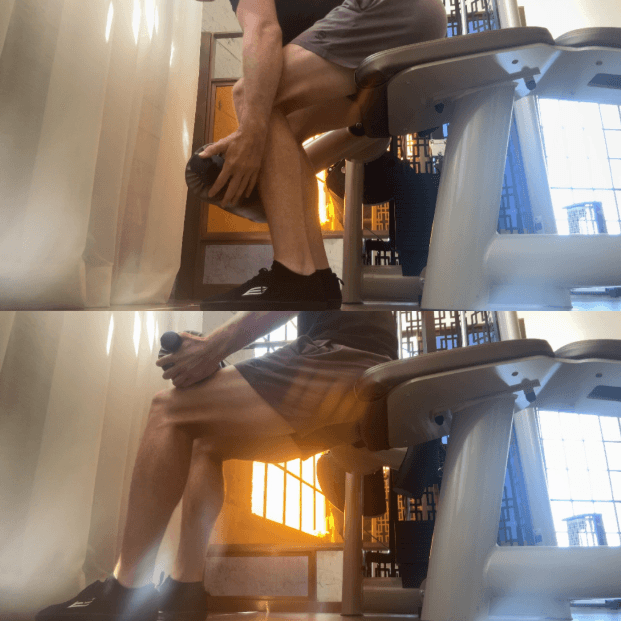
…then sliding the butt down, lying back, gripping behind you…
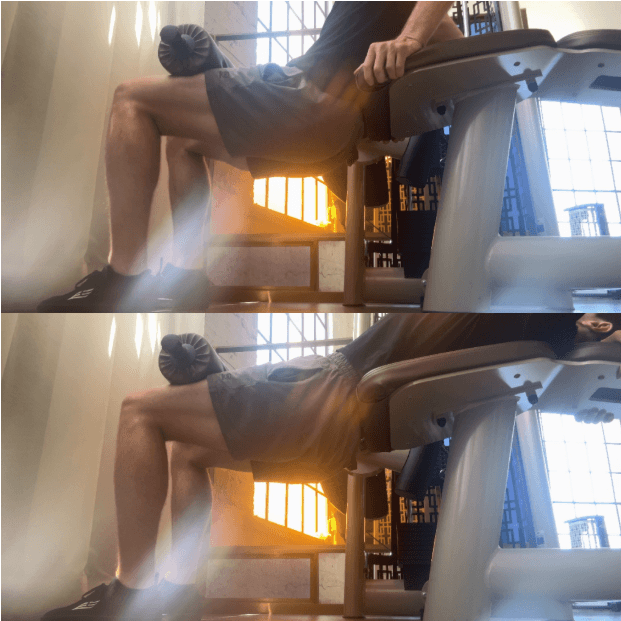
…and driving your knee up!
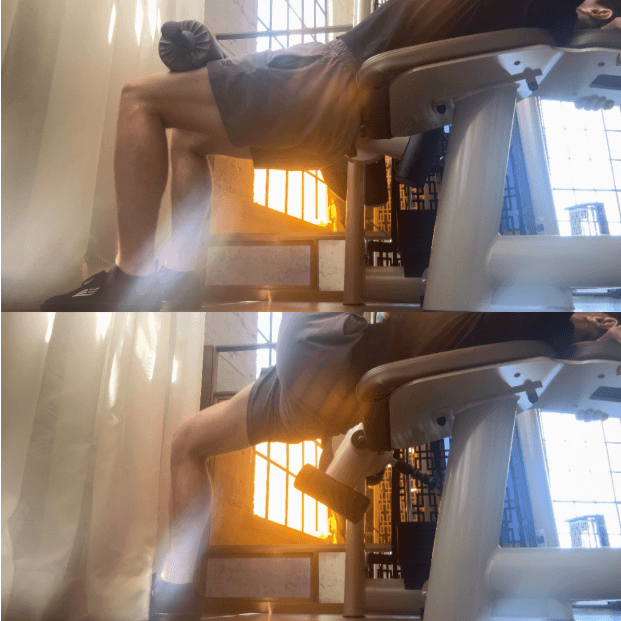
For frame of reference, I first tested my hamstring curl at 100% of my bodyweight for 8 reps. I failed to complete a 9th rep.
I then tested my hip flexors at 50% of my bodyweight per leg for 6 reps. I failed to complete a 7th rep.
For further frame of reference, 90 pounds on the machine feels almost identical to 45 pounds with free weight. [In the picture below, I’m using the MonkeyFoot device, so I don’t have to worry about discomfort or the weight slipping off.]
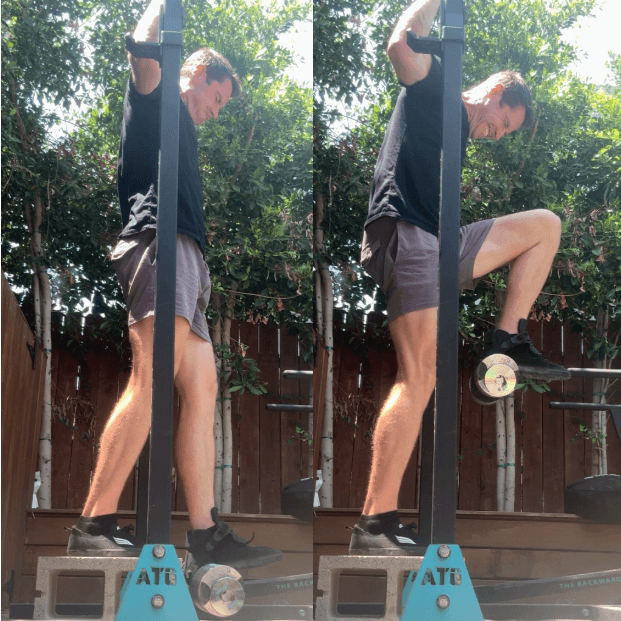
The machine version opens the door to a measurably strict test and training method to get closer to your true strength potential for the hip flexors - with comparison from side to side as well as from hip flexors to hamstrings.
In my current program I am training/testing them once every 14 days, using a 5-10 rep bracket (get 10 = go up, can’t get 5 = go down), with the plan to do so for 5-10 years.
If I said to work your 5-10 rep max for 5-10 years for your chest, it would be conservative, well-supported advice, but I cannot find evidence of this being broadly done for the hip flexors.
Huge thanks to Case Grant for thinking up this solution. Case is in college to become a physical therapist, and he’s been following ATG since the early days. He has been loading up his hip flexors on his way to achieving his goal of running a 4.3 second 40-yard dash (laser-timed).
If you see me refer to “Case Curls,” now you know which exercise I’m talking about and why!
Case asked me to remind you that if you currently sprint, and now all-of-a-sudden start seriously strength training your hip flexors, expect soreness. As such, he advises not going to failure from the first session. Make sure you’re not too sore, and build up over time.
Important note: Case is one of the best examples I’ve seen of this entire speed series coming together!
I’ll also show you what I call the “Jamaican Hip Flexor.” No training group appears to have run faster than this one, and they directly trained the hip flexors by hooking up to a cable, standing on a step, holding above, and then going to work!

When in doubt, I use a “Week A/B” approach, alternating weeks between different methods I like.
The Jamaican version is easier to cheat than the Case Curl, so I wouldn’t use it for strict measurement.
The Jamaican version also requires more setup, whereas with the Case Curl I can get right to work.
They are both great options, in my book.
Context
If you have money on the line for your speed, I advise one or more of the above methods.
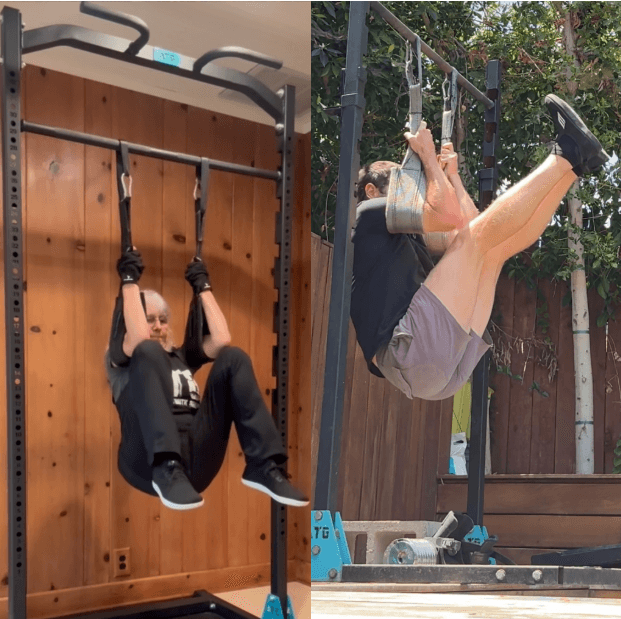
For general health and speed, I am also a huge fan of hanging knee raise progression.
The hanging knee raise trains your hip flexors as well as abs.
My mom is at 5 reps knees to elbows.
When 20 reps gets easy, I advise progressing to straight legs! Even the fastest athletes I’ve coached get a good challenge from this one.
As covered in Part 2, the elephant in the room when it comes to speed is that most adults will not even sprint for most of their lives.
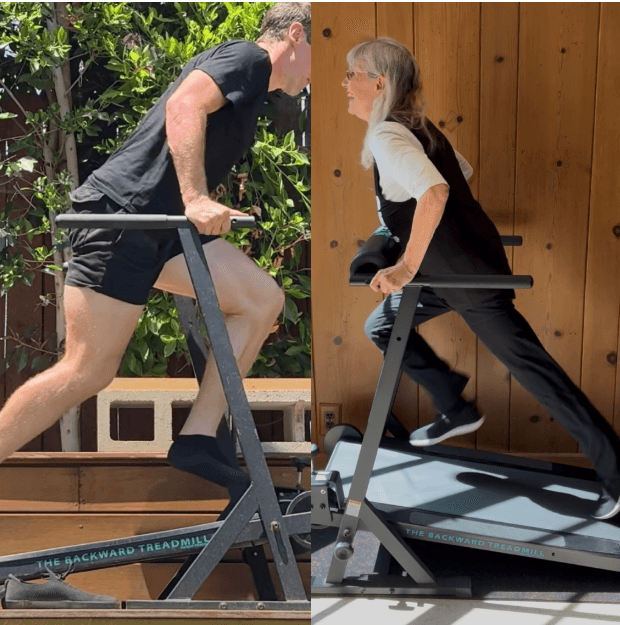
Gradient scale resisted hill units can easily supply many of these benefits, at low cost compared to the electric treadmills you usually see in gyms.
We are steadily progressing toward offering the most affordable such unit there’s ever been. I hope to release it in the next few months.
In the meantime, I’ve been using our backward treadmill (designed for knee rehab and general knee health) to stay in decent sprinting shape for the past 3 years.
I hope this article has added more knowledge to your toolbox.
Yours in Solutions,
Ben
For further help with my ATG Basics and Pro Sports programs: atgonlinecoaching.com
To see if there’s an ATG coach or gym near you: map.atgforcoaches.com
Sign up for free knowledge
We send out new articles weekly.