Speed Truth Part 2
Building brain armor against false data
Speed Truth 1 covered the false data of “no knees over toes” as it relates to the start of a sprint, along with a variety of gradient-scale training options.
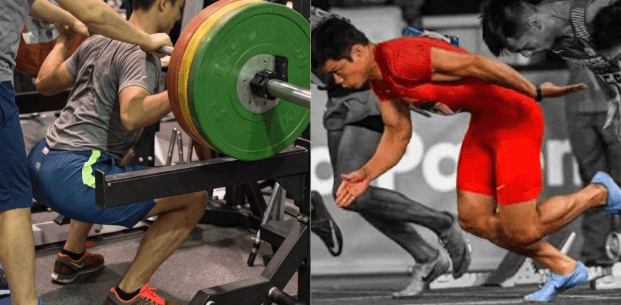
Speed Truth 2 aims to build brain armor against common, political-style social media content trying to tear down helpful exercises for the backside.
When you sprint, your hamstrings (back of thighs) take some of the most force of any muscle group - up to 9 times your bodyweight, according to some studies.
Sprinting is therefore a powerful hamstring exercise.
However, “hamstring pull” appears at the top of the most common injuries while sprinting!
As such, every top sprinter I can find uses some sort of hamstring strengthening exercise off the track to support their speed and help reduce injury risk.
Unfortunately, I see four common styles of social media posts meant to deceive young athletes out of hamstring exercises which have worked for decades at the highest levels.
On social media, it is very common to put down an exercise you don’t do, in order to prop up one that you do.
This political tactic works, and I find myself having to correct confused questioners who are missing facts.
For the record, I have ZERO posts putting down any specific exercise or person, despite seeing my own image used hundreds of times by others trying to put me down.
I also want you to understand that I do not blame those playing the tear-down games. This is the norm among leaders in both fitness and society itself. Tearing others down works to start arguments and go viral on social media. Having talked with many good young coaches, it’s startling to find that they believe they have to lie or tear someone down in order to grow audience on social media!
Just like with “no knees over toes,” I do not blame any person.
It’s on me to prove that you can use freedom and respect and still win, so for any young person reading this, I want you to note that I’ve been more successful than my wildest dreams.
When you cannot lie or put others down, what happens? How do you get views? You have to focus on your ability. Therefore: I actually believe the route to your true potential - even on social media - is through more focus on your ability and less focus on tearing others down.
OUT OF CONTEXT CRITICISM #1
“Machine hamstring curl is better than Nordic (bodyweight).” [These posts don’t then point out the obvious positives of Nordic.]
Response:
I do both machine hamstring curls and Nordics. I alternate weeks. I love them both.
The elephant in the room is that the Nordic can be done for FREE. Also, before we can even compare advantages, a young athlete should know that the Nordic is good enough for the CURRENT FASTEST MAN IN THE WORLD.

Noah Lyles, the most recent Olympic gold medalist 100-meter sprinter, has incredible ability in the Nordic.
You can also find examples of some of the all-time greats in track and field using a hamstring curl machine.
They obviously can both help by strengthening the hamstrings, which as stated above, have among the most force upon them of any muscle group when you sprint.
Obvious ADVANTAGES:
Nordic
-can be done for free
-simply resisting the way down provides a ton of room for strength development for most people, and since your body is falling forward, it is a remarkably user-friendly way to work hard on your hamstring strength
Machine
-precise measurement! (For example, I know right now that I can do 100% of my weight on a ham curl machine for 4 reps - not 5. I am working toward 5. I love this honest measurement when working toward world-class goals. Note: Machines will vary in what the number really means. If money is on the line for your speed, I simply recommend tracking and improving your number on the same machine. There’s no magic number.)
-easier variety of styles (one leg, etc.)
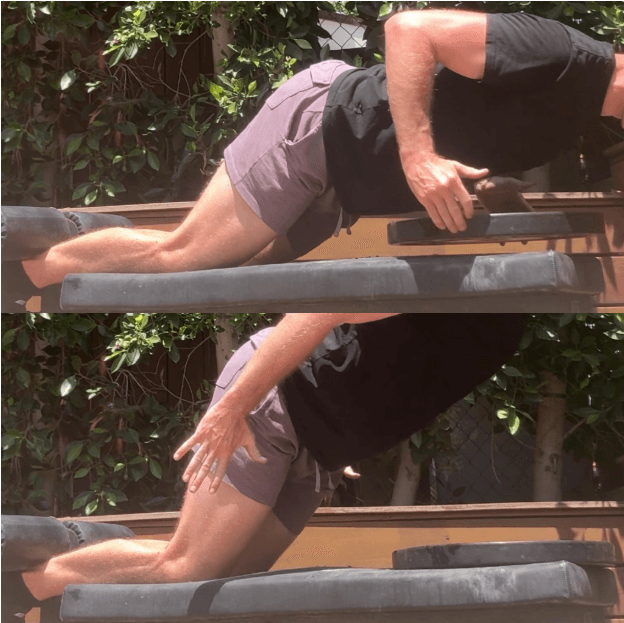
My pro programs use two-week schedules, not one week. There’s too much good stuff I want to train and not enough time to realistically recover from it all in one week, so I “Week A/B” a hamstring curl machine, working on my precisely measurable strength, and then the next week I work on my strength on the way down in the Nordic, holding weight as I resist the lowering portion, then letting the weight go and exploding my body’s weight back up.
OUT OF CONTEXT CRITICISM #2
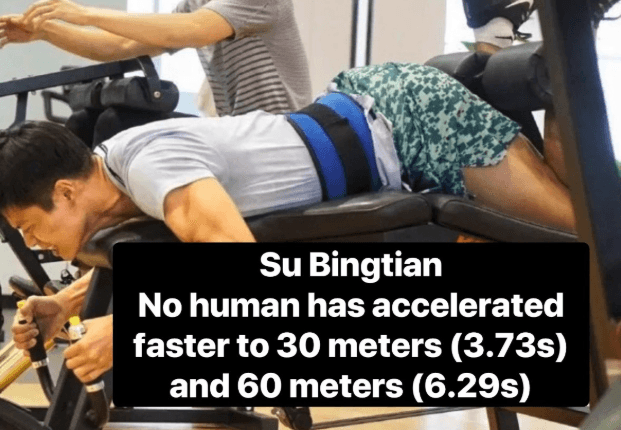
It’s hard to believe this is real life, but I’ve recently seen posts successfullytricking young athletes into thinking machine hamstring curls are a bad choice for athleticism due to being on a rigid machine!
That’s an opinion, but do you think those posts would succeed in tricking young minds if they also pointed out the FACT that NO HUMAN HAS ACCELERATED FASTER TO 30 METERS OR 60 METERS than Su Bingtian, who used the hamstring curl in his balanced routine?
Can you see how this is very different from politics?
The Nordic isn’t embezzling money and the ham curl machine didn’t sleep with his secretary. It makes more sense to point out the advantages of each than put one down in favor of the other.
OUT OF CONTEXT CRITICISM #3
A movement like an RDL (Romanian Deadlift, a deadlift style where you don’t drop the weight back down to the ground) in which you place your hamstrings in a stretch while also challenging the strength of the hamstrings, glutes, and lower back, does have potentially more total benefits than an isolated hamstring curl.
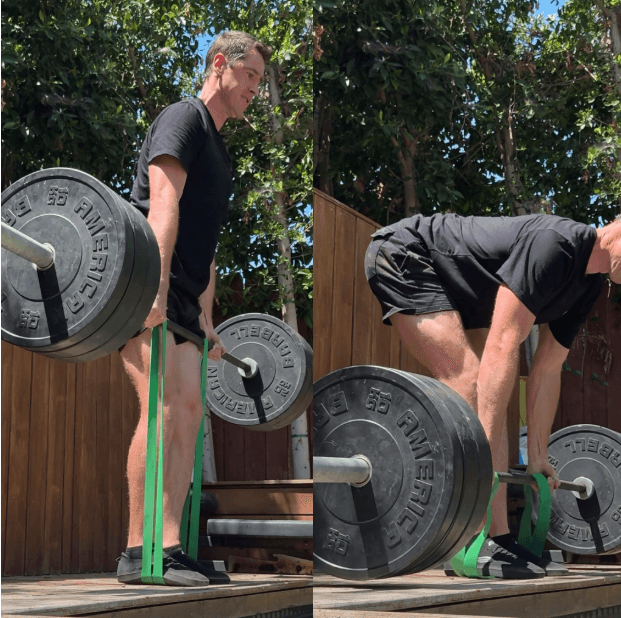
Unfortunately, I’ve seen this used in political-style posts to convince young athletes out of hamstring curls!
Again: THIS IS NOT POLITICS.
FACT: YOU DO NOT HAVE TO CHOOSE HAMSTRING CURL “OR” RDL.
In an election, you only get to choose one side.
In exercise, you can use multiple exercises for an area. With hamstrings, it would be more truthful to do hamstring curls and RDLs than one or the other.
OUT OF CONTEXT CRITICISM #4
“Just sprint.”
This is one I get a lot, due to the circulation of posts citing a study where sprinting improved hamstring strength more than Nordics.
First, I can’t find a single elite sprinter who doesn’t support sprinting with some form of hamstring strengthening.
Once again: Exercise is not a political election. You don’t have to choose only one candidate.
Now, the elephant in the room:
Statistically: Most adults will spend most of their lives never sprinting!
After school age, there are far fewer opportunities to sprint.
The further removed from sprinting, the riskier it gets.
For the average adult to sprint, I believe we will need some of the 60 million treadmills in existence to be designed for safe sprinting.
This means no electricity to spin the belt for you. That’s your hamstrings’ job. This also ensures you don’t get into a risky spot by going too fast. Electric treadmills are simply more dangerous for sprinting than resisted ones - by a lot. Danger and fear are huge barriers to adults sprinting.
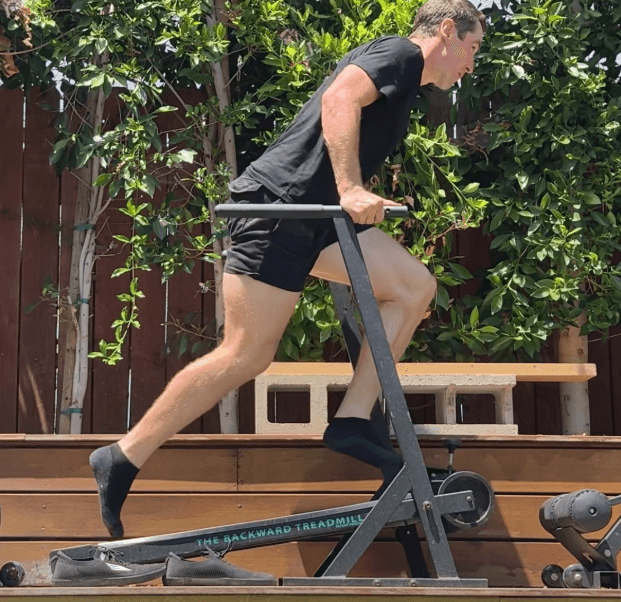
What I started as a small unit to mimic backward sled, I’m now progressing to a larger size for gradient scale running/sprinting.
[Here is my current unit designed for resistance backward. I’m 6’1”. This has kept me in shape the past few years. It can be done even better, though.]
REGRESSIONS
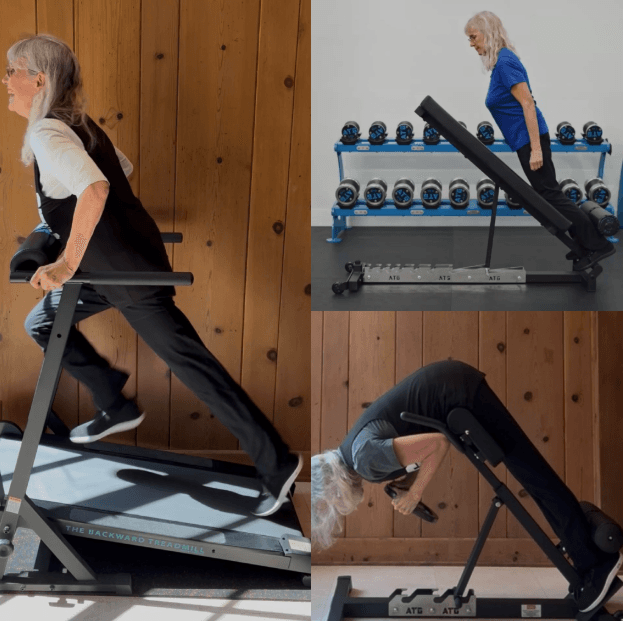
Every exercise I do, my mom can do at age 72 by figuring out gradient scales.
Most of my articles feature detailed progression/regression content, so please don’t hesitate to reach out through the app or the site if you have any questions.
Yours in Solutions,
Ben
For further help with my ATG Basics and Pro Sports programs: atgonlinecoaching.com
To see if there’s an ATG coach or gym near you: map.atgforcoaches.com
Sign up for free knowledge
We send out new articles weekly.