Every Regression Counts: Lower Back
A strategic path to address a lower back
For over 60 years, a simple, horizontal bodyweight back extension hold has been effectively used in physical therapy to help predict and prevent lower back injuries.
More ability = fewer problems.
Anyone can work on this at home with just a wall and some sort of comfy padding for the hips.
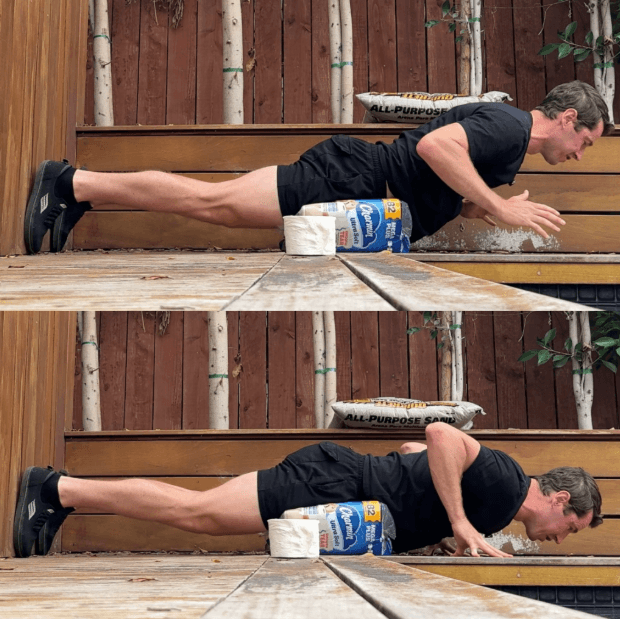
[The most comfortable I’ve found without a back extension machine is a 9-pack of toilet paper with the top center roll removed.]
There are many ways you can address a lower back, but the reason this is a strategic path is because the #1 way to injure your back is to pick something up.
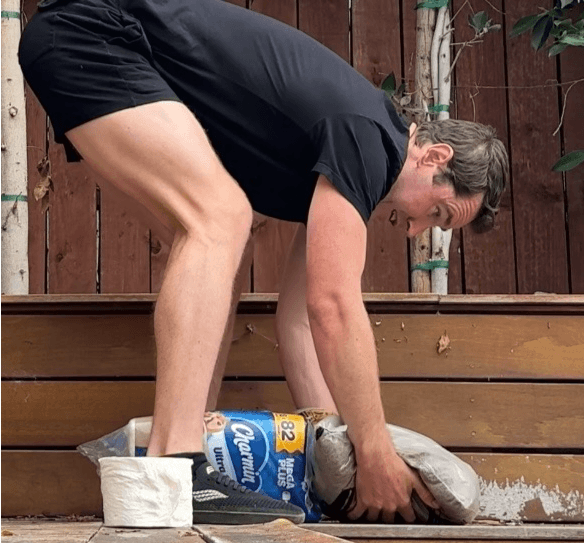
In other words, this allows you to start working on the ability of your lower back without the same risk of bending over.
From there, logical progression is into greater range of motion and greater strength, but think with this in terms of weeks, months, YEARS.
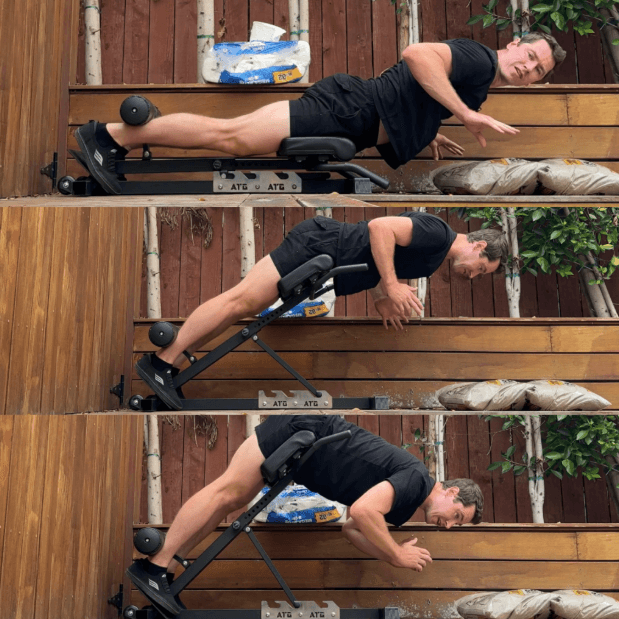
Human bodies adapt. Just slowly.
If they didn’t adapt, there would be no reason to train strength and flexibility whatsoever.
When you use a back extension machine, the machine doesn’t magically grow back a little bit stronger and more flexible. The human body does.
Now let’s look at the weekly minimum “set” for my spine. It’s four parts, in a row:
First, BRACING. This is 100 pounds (two 50-pound sandbags - $4 each).
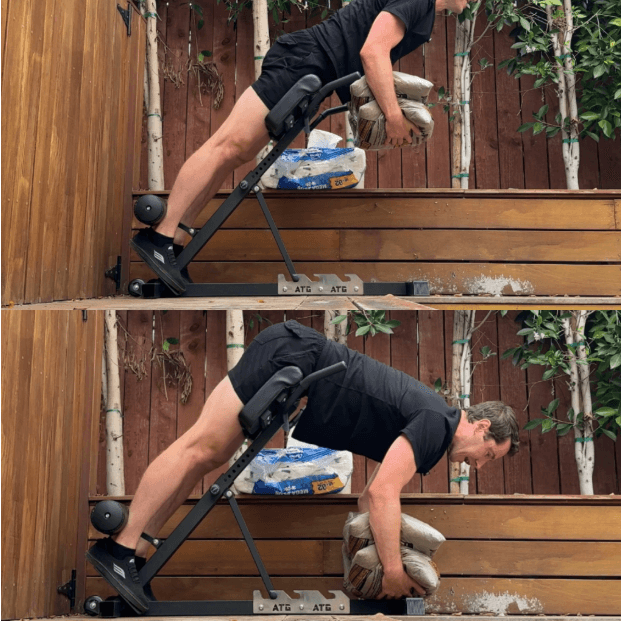
When that tires, I drop one bag and then work on full flexion!
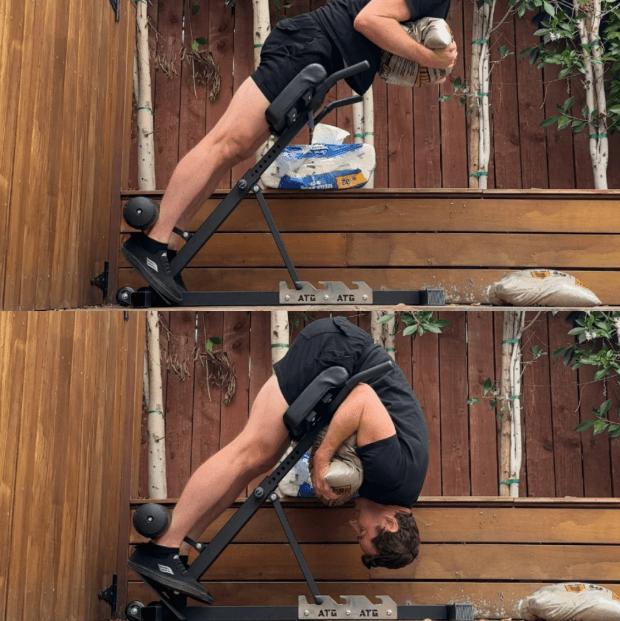
Flexion was broadly misunderstood in exercise science. Yes: If you bend a spine hard enough it breaks - but that’s no reason to accept poor levels of strength and flexibility!
My simple 2:1 ratio above gives a workable pathway. Each of these abilities protects my lower back in different ways! I’m not rounding my spine with 100 pounds. I am then rounding it with 50 pounds. The back extension machine makes this extra gentle due to the angle at the bottom. You could practically take a nap down there.
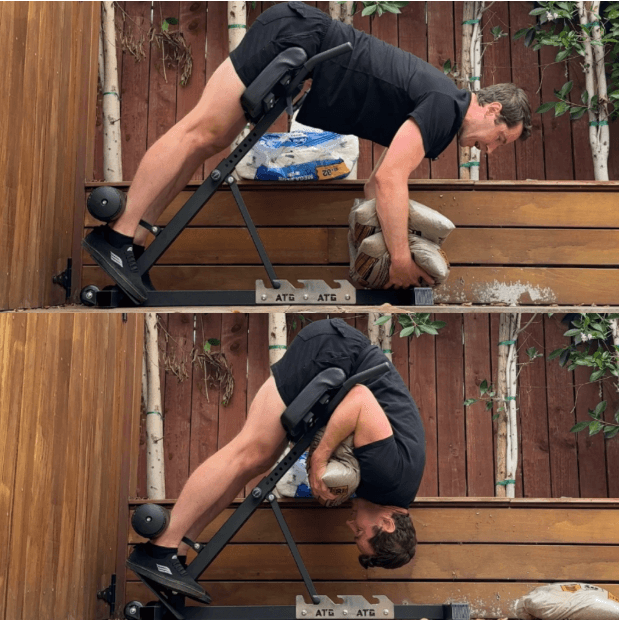
So I’m cultivating some BASIC human spine ability, rather than avoiding a natural human ability.
When that fatigues me, I drop the sandbag, switch to one leg, and work on rotation. Left elbow toward right foot. Right elbow toward sky. Rotate left elbow toward sky. Now right elbow toward left foot. Left elbow back toward sky. Rotate back.
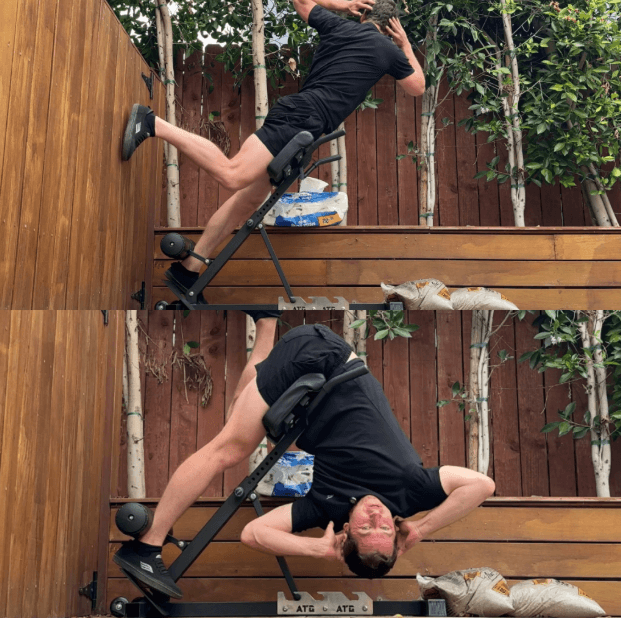
When that fatigues, I switch fully to the side, no longer using the muscles that connect from behind the lower spine, and now fully using the quadratus lumborum muscles which connect into the sides of the lower spine.
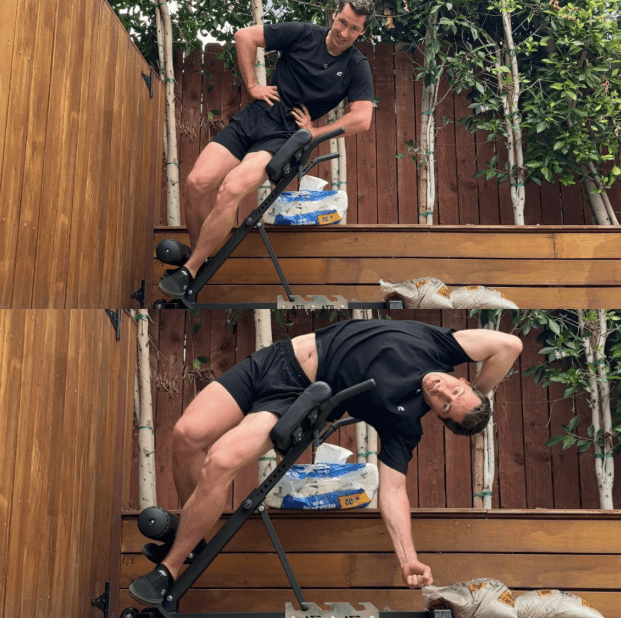
Now maybe you can see why this back extension is one of only two pieces of machinery that I don’t want to live without for my family’s health (the other being a hill treadmill at home, and hills are free).
There’s nothing else I think will save more money for my family’s lower back expenses in the long run. My father spent $1000s on treatments that didn’t get the lasting results which patiently improving his ABILITY did.
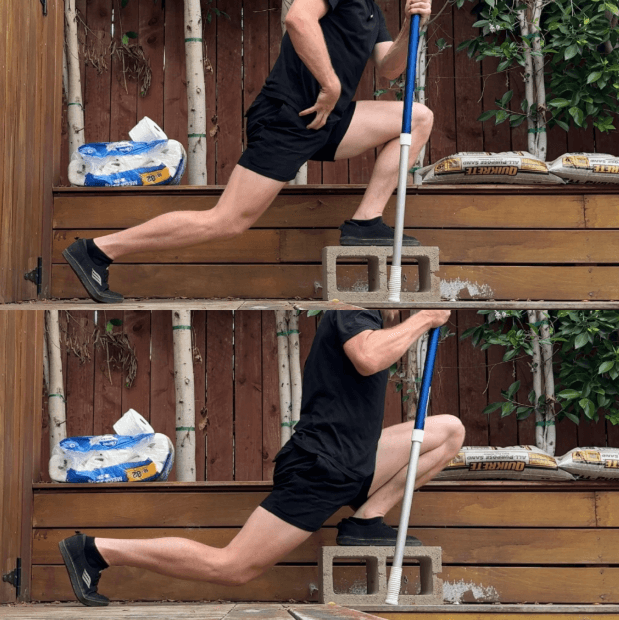
For good measure, the ATG Basics Spine Day also addresses the opposite of the lower back, lengthening the hip flexors which come up and attach into the front of your lower spine.
This even addresses ankle mobility, which makes your back less vulnerable when squatting down.
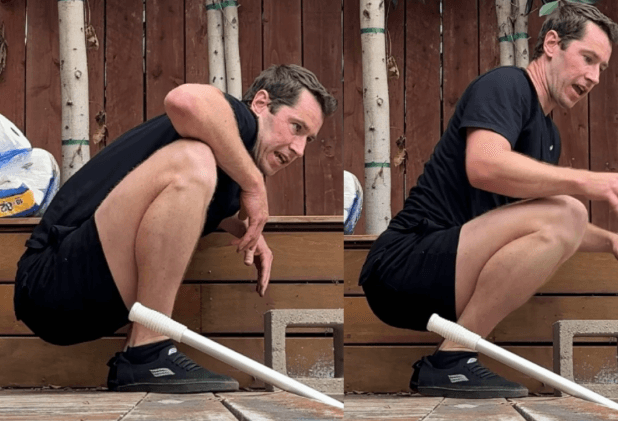
So your entire body is connected.
Your total abilities to withstand the demands in life matter. We have strategic systems by using this “from the ground up” pathway for the knees, lower back, and shoulders, among others.
However…
YOU HAVE NO GUARANTEES.
Life is a game of Demand v Ability.
My job is helping you play that game a bit better.
Yours in Solutions,
Ben
For further ATG Basics program help ($19 to $99/mo) and the custom equipment I make for my coaching: ATGonlinecoaching.com
To see if I’ve certified an ATG coach near you: map.ATGforcoaches.com
Sign up for free knowledge
We send out new articles weekly.