Hoop Dreams Strength & Mobility System
Students experiencing the priceless joy of helping others
[This article has a long intro, so feel free to skip ahead right to the workout system!]
Background to The Problem
I’m coaching JV and varsity boys basketball at a high school that, in its 50 years, has never gone far in the state playoffs.
This is a busy academic school. They produce students with integrity and responsibility that would make you proud. I absolutely love working with them.
However, this is a place where varsity starters are often missing from practice for choir or drama performances!
Meanwhile, I’m a busy dad and business owner, and my coaching here is purely on a volunteer basis.
Outside of practice and game times, my own kids come first.
A few days ago, it finally hit me:
My coaching abilities simply aren’t good enough to help these kids the way I know I can.
I know I can because I was in this school system through middle school, and I self-taught my way to further success with basketball than anyone who’s ever attended this school.
The school helped forge my foundations of intellect and work ethic, but I didn’t continue for high school. Instead, I sought out more competitive basketball programs.
I was not fully myself back then.
I was self-centered.
I hadn’t yet realized that what is important is how much service you can give the world and how much better you can make things around you!
Right now: How many other people are glad that you have lived?
Great families, teams, schools, and civilizations are built by people who live this way.
At age 14, I was not that guy yet.
Important note:
Don’t mistake helping others for lack of personal success!
In basketball, the player who organized the most team workouts at his home was…
MICHAEL JORDAN.
The Solution
This article is the first in a line of articles and videos where I will make SYSTEMS that allow more of my students to gain the priceless ability to help other students.
Last week I felt defeated.
Now I see a bigger win ahead: more students experiencing the priceless joy of helping others.
Where Do We Start?
I had chronic knee pain by age 12.
By 17-19 I couldn’t even complete a basketball season.
I got zero college recruitment.
My athleticism halted.
Then my skills began to worsen because I couldn’t practice much anymore.
It wasn’t until my 20s that I revived my basketball career with what became ATG, and I self-marketed to a junior college. I continued to work on the ATG system while earning the starting point guard position, helping my team win back-to-back conference titles and receiving a full-ride D1 scholarship.
[More importantly, I continued to go back to my junior college to help with the strength training, thanks to my former coach, Jeremy Shulman, who gave me a shot in spite of ATG being extremely unusual at the time. Coach Shulman led them to one of the most consistently successful Juco programs of all time. He’s now the head coach at Tennessee-Martin, a small D1, and he’s quickly got them to one of their most successful season starts in school history! I’ll be visiting his new team regularly in the off-seasons to continue helping with his own “hoop dreams” systems. Shulman is one of the most genuinely caring people I’ve met on my journey thus far, and his unrelenting efforts to find winning systems on and off the court changed my life forever.]
But my college basketball playing days ended abruptly. The NCAA ruled that I was too old, and my D1 eligibility was denied.
I was already coaching kids with ATG in the off-season, and I knew my purpose was helping others.
I also knew there was a big problem:
At every college I had visited, strength coaches told me I would NOT be allowed to train my legs with a full range of motion, even though that’s what saved my knees enough to receive their scholarship offers!
Not only did my personal freedom feel attacked, but the myths of “no knee over toes” and “no full range of motion” did not have evidence behind them. Long-term research was proving otherwise, but because the textbooks were written with a lie, the strength coaches regurgitated the lie without respecting my freedom!
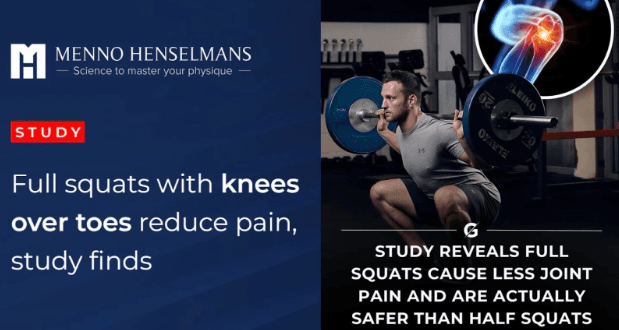
Ultimately, that’s why I started ATG and called myself Kneesovertoesguy.
Now let’s circle back: Where do we start?
Well, I had chronic knee pain by 12, so we better start there!
This article will cover what I would have programmed for myself in middle school (roughly age 11-13) and then in high school (roughly age 14-18).
Last Note of Basketball Context
To be clear, I’m making a:
-measurable dribbling system with 3 levels
-measurable passing system with 2 levels
-measurable shooting system with 4 levels
-measurable moves system with 5 levels
-measurable jump/dunk system with 4 levels
The strength system is just one aspect of helping make hoop dreams come true.
The basketball skills systems will be tough to explain in article form, so I’ll hit 2026 running and immediately start filming those.
All these systems will be in free, step-by-step videos, and my articles will keep you posted on them.
Hoop Dreams Strength System
This breaks up into 4 short routines.
Each routine is explained in detail, after which I list out the program so you can screenshot for easy memory.
Workout 1 of 4: Rocket Legs
The first routine is perhaps the simplest in the history of basketball strength programs.
For middle school it has only 1 exercise.
For high school it has 2.
It’s now well documented that making your legs stronger relative to your weight is effective for improving speed and jumping.
However, the game of basketball is played almost exclusively upward from thighs parallel to the floor.
This leaves below parallel the most underdeveloped area, with incredible long-term jump and knee protection results available.
This is so important, it’s the ONLY exercise in Workout 1 for middle school players.
I’m limiting middle school players to dumbbell loading.
At our school I donated dumbbell sets going up to 75 pounds.
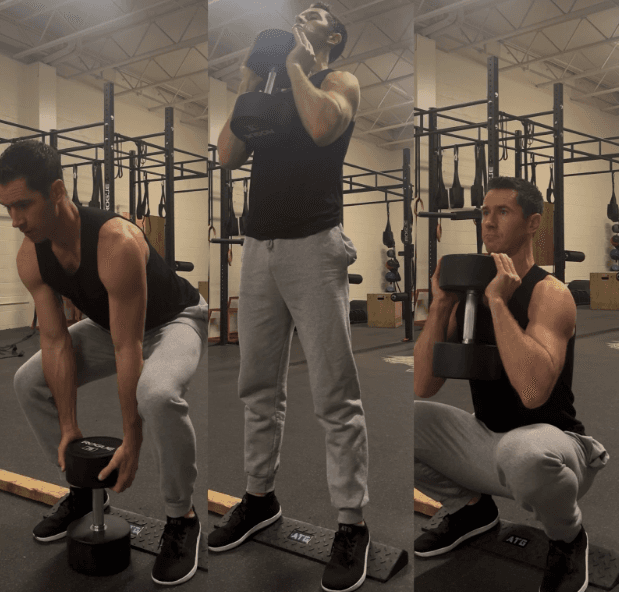
Even the varsity has only a couple players who can OWN 10 reps in a full squat with 75 pounds.
This is good!
This means middle school has huge benefits available with a super safe exercise!
[Without a squat ramp, a 2x4 works great to elevate the heels. Heel elevation allows all my players to use a full range of motion without rounding the lower back.]
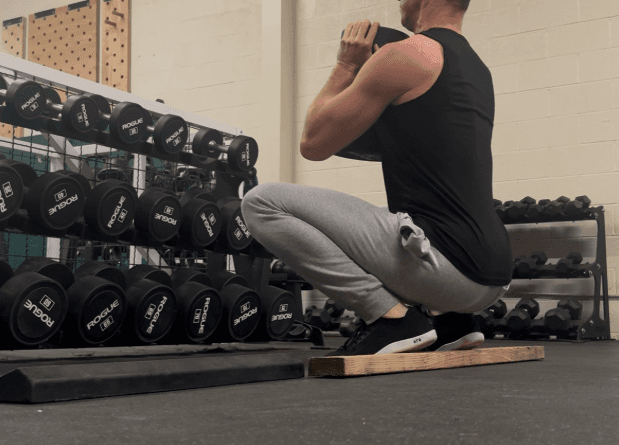
Occasionally, a player may think they can’t do a full squat with the dumbbell. In such a case, have them hold a plate and reach it forward as they go down.
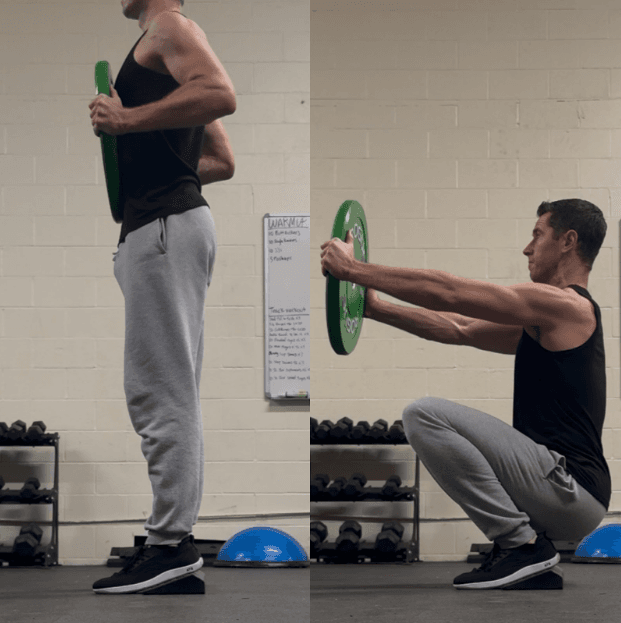
As they get stronger and more mobile, they can progress the plate closer to the body and eventually move on to the dumbbell.
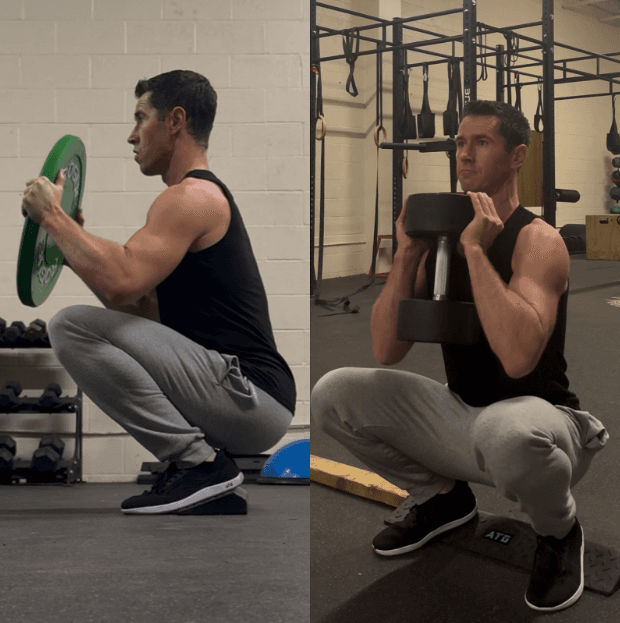
Form Note:
I coach NO BOUNCE out of the bottom.
I’ve never walked into a gym and seen someone OWN a full squat.
I’ve only seen people either: 1) stop short, or 2) bounce out of the bottom.
For this reason I title this exercise:
NO-BOUNCE FULL SQUAT
When you’re coaching something that most people have never seen, you may need different terms so people don’t mess up your intentions.
3 sets of 6 to 10 reps is a good starting protocol for the No-Bounce Full Squat.
This means if you can OWN 10 reps, you can increase the load.
If you can’t OWN at least 6, decrease.
And if between 7 and 9 reps is challenging you, keep the weight the same.
Creating Buy-In!!!
To get my varsity team excited for full squats, I join them on the court, dunking off of moves and demonstrating the things they want to be able to do.
I had no problem flooding my original ATG gym with clients because so many locals knew me when I couldn’t even grab the rim in high school!
My lack of natural athleticism - then being able to manufacture it - made selling ATG like selling construction.
Build results.
Take others through what produced those results.
However: Even I have extra examples at the ready!
One of my best friends in the biz, Alan Bishop, has had University of Houston men’s basketball OWNING full squats for all 6 years he’s been there.
In this time, out of 300+ Division 1 teams, NO ONE has been more successful with fewer highly-ranked recruits!
They’ve been on a historic run of 6 straight Sweet 16s or better.
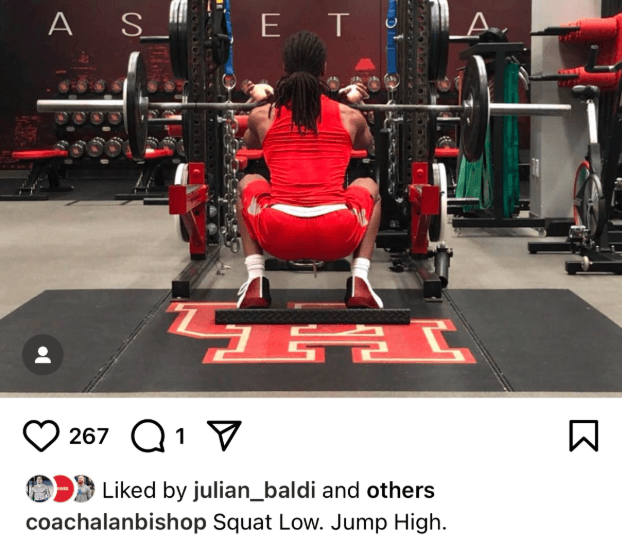
Oh, and if your middle schoolers think the dumbbell version is lame, here’s STEPHEN CURRY doing it:
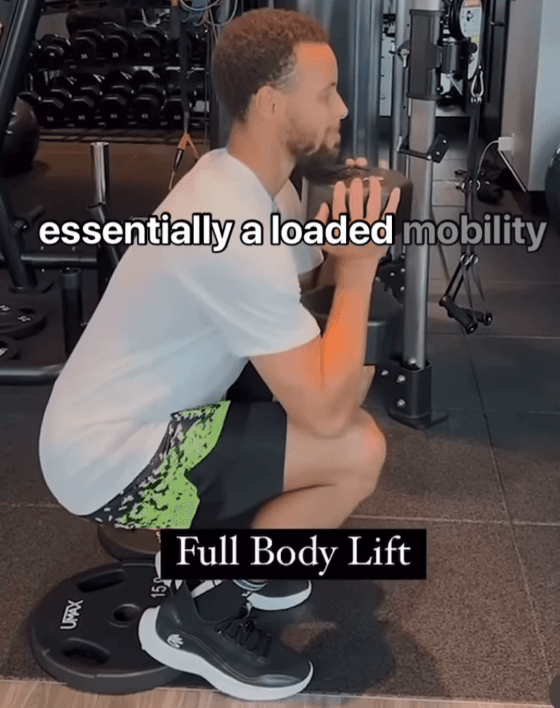
I haven’t worked with Stephen Curry personally, but I have helped quite a few other athletes of his fame and pay grade, and I’ve seen some of my mobility products in the gyms of NBA MVPs and Hall of Famers.
We are winning the educational fight for FREEDOM of your full squat.
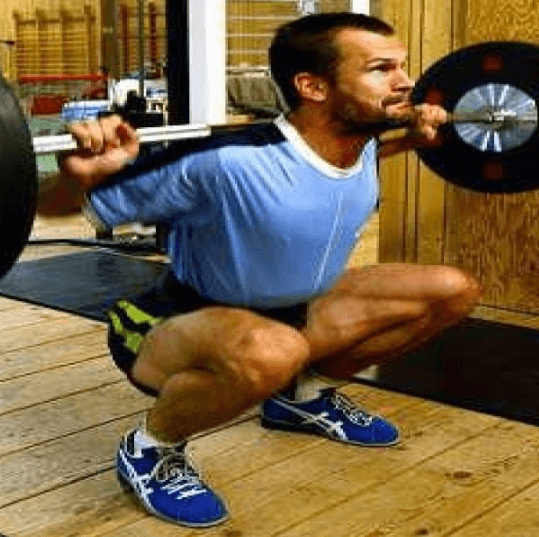
For high schoolers who can own 10 full squats with a 75-pound dumbbell, I will allow front squats (as shown above at U Houston) and back squats, shown below by Stefan Holm, a 5’11” high jumper who cleared 2 feet over his head, winning an Olympic gold medal. While he had the best documented high jump longevity in history, Americans were prevented from full squats. They experienced neither his results nor resilience.
REALISTIC ESTIMATION OF PERSISTENCE
Over 15 years of full squat experimentation and coaching, my honest estimation for basketball is once per week for 4 YEARS to approach your genetic athletic potential.
Once earning the barbell as stated above, I suggest using 3 challenging sets in the 3-5 rep range for front squat, then the next week 3 challenging sets in the 6-10 rep range for back squat, and so on, alternating for 4 years.
The sets and reps are less important than the form intent and persistence over 4 years.
Also, once earning the barbell, Workout 1 adds just ONE more exercise, for the same rep ranges:
NO-BOUNCE HEX DEADLIFT
A hex bar is arguably the simplest and safest way to further power up the general basketball leg positions.
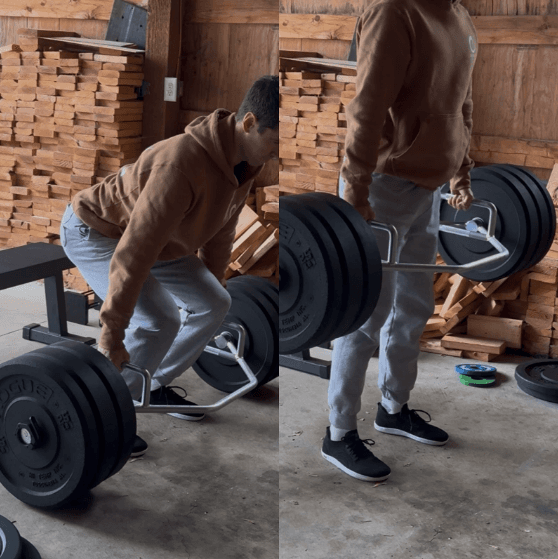
In basketball, this has become a very common exercise, however:
-For high school, I think you should full squat first to “earn” the hex deadlifts, otherwise people may be tempted to skip the full squats.
-I think you should end the session right there. In basketball it can be very tricky to schedule long weightlifting workouts, especially in-season, but with just 1-2 exercises for 3 challenging sets, we can create completely different outcomes over 4 years.
-Once again, I am coaching NO BOUNCE. This means if you can’t quietly control the weights to the ground, it’s too heavy for our long-term purposes. Being able to handle your strength on the way down will create different long-term knee protection outcomes, while actually making you even springier off the ground. In the game of basketball, your legs are the bounce.
Last Note of Context For Workout 1: Hex vs Chains
When I got the ability to dunk in my early 20s, my main lift was a full squat with chains.
Let’s say theoretically I could own 200 pounds in a full squat, but could handle 300 pounds if I just stayed in a higher leg position like basketball.
Adding 100 pounds of chains would allow me to have 200 pounds at the bottom and 300 at the top.
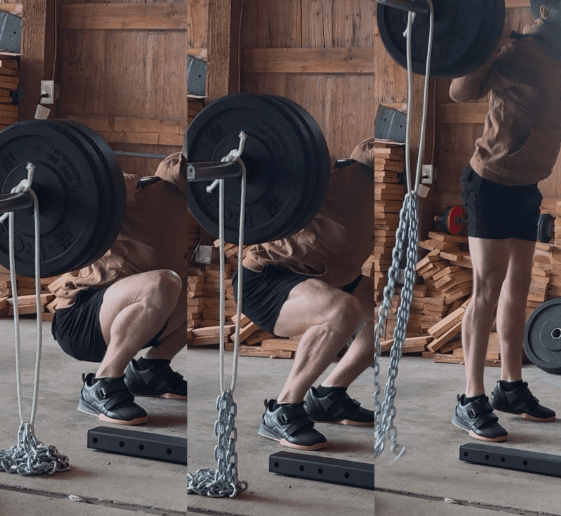
I thus used full squats with chains extensively at my original ATG gym.
However, on a team basis this becomes very tricky to apply because different heights throw off the application and measurability.
Hex bars also don’t need squat racks, and that allows me to coach larger groups with more efficient use of my space.
Workout 2: Accessory
In basketball, the ankles, knees, and lower back are common limiters.
Tibialis rotation and calf raise are easy for teams to do from any gym.
Tibialis rotation is particularly helpful for basketball, due to how common ankle sprains are. How fortuitous that it can be done right on any court, against a wall. Make sure only your butt touches the wall - not your back - and then go to actual muscular failure!
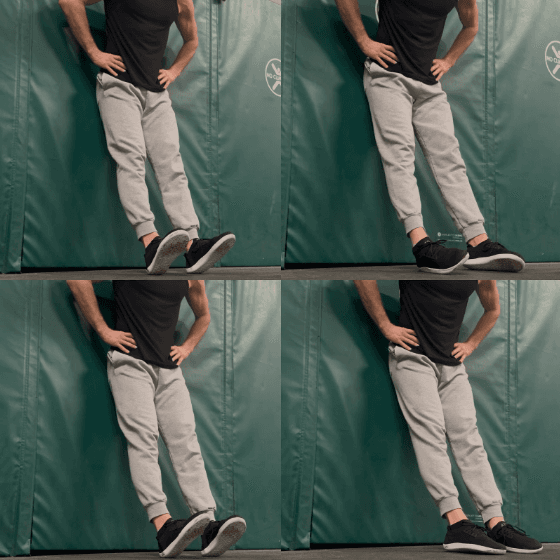
The single-leg calf raise then balances out the tibialis rotations for long-term lower leg development to keep up with the power your upper legs will generate on this program. Pause at top and bottom of each rep, and go to failure.
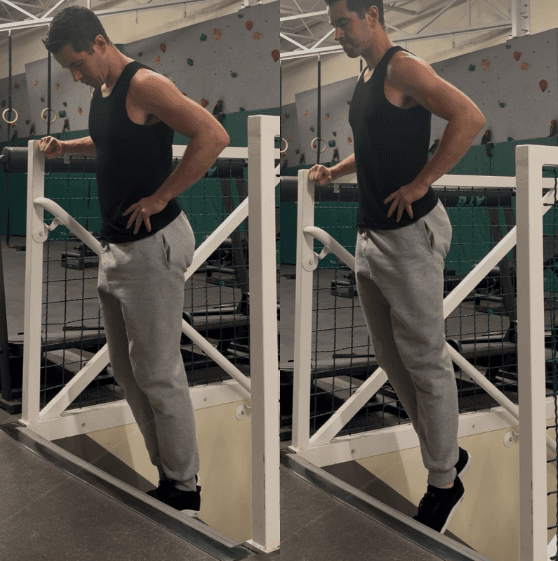
Ham rollers and slant step-ups use equipment, but at least that equipment is easy to move around and use with large groups.
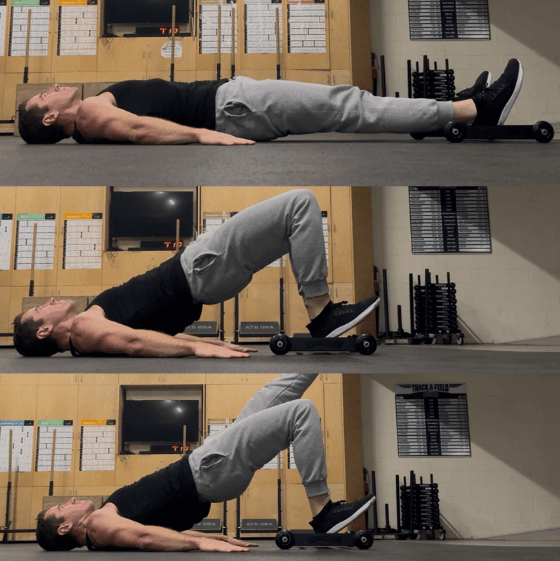
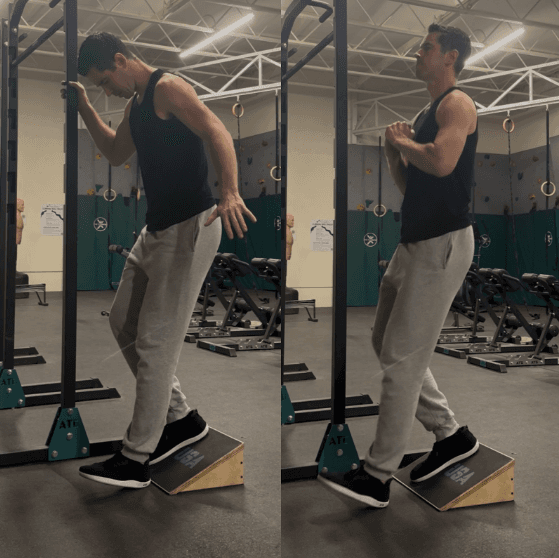
Back extension machines and low ab straps require a bit more equipment but are still super affordable and portable as far as exercise equipment goes, and they allow my 3 favorite lower back protection exercises.
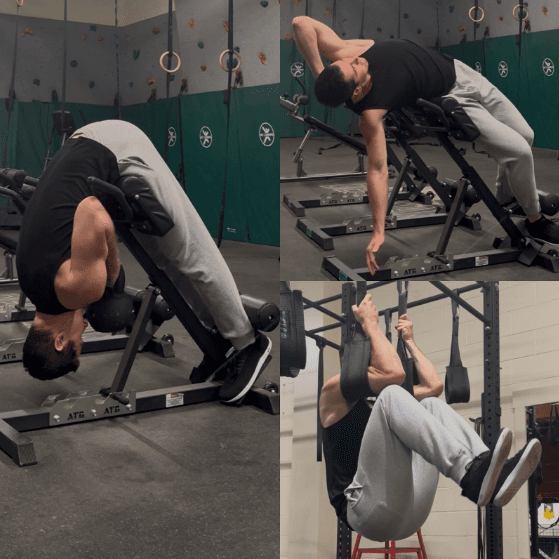
These exercises can easily be done as an efficient circuit, with 2nd or 3rd sets done for problem areas.
Loading Note:
Once bodyweight is easy, any form of loading can supply more lower back protection. My personal favorite loading implement is a kettlebell because it doesn’t cut off my range of motion at the bottom, and I get extra forearm benefits at the top (fewer turnovers!).
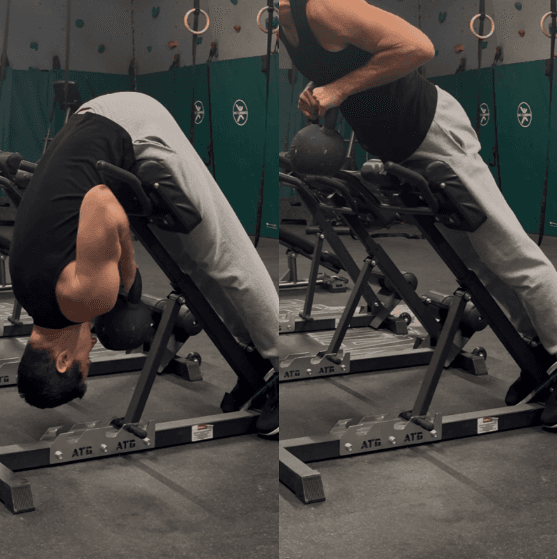
[The full range back extension, with good GLUTES AND ABS SQUEEZE at the top, is incredibly underrated for lower back health for adults, too!]
Workout 3: Mobility
Full forward split squats can be done from pretty much any gym.
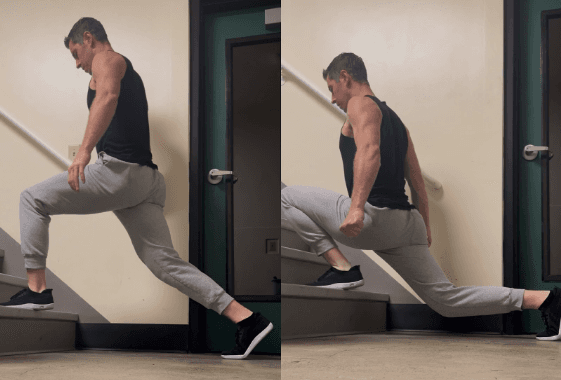
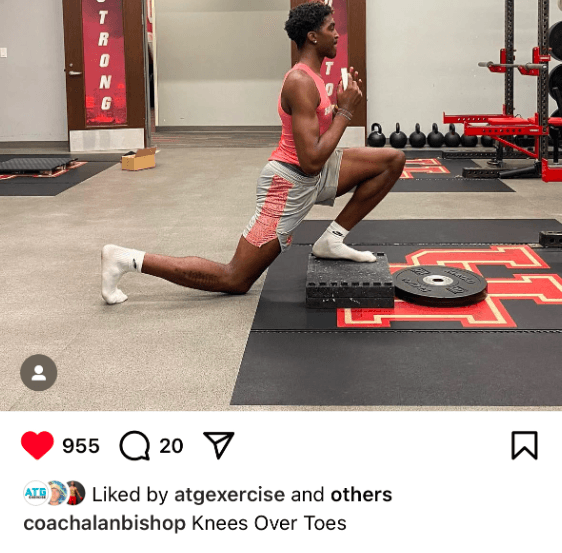
(By the way, even the badass U Houston team works on their mobility!)
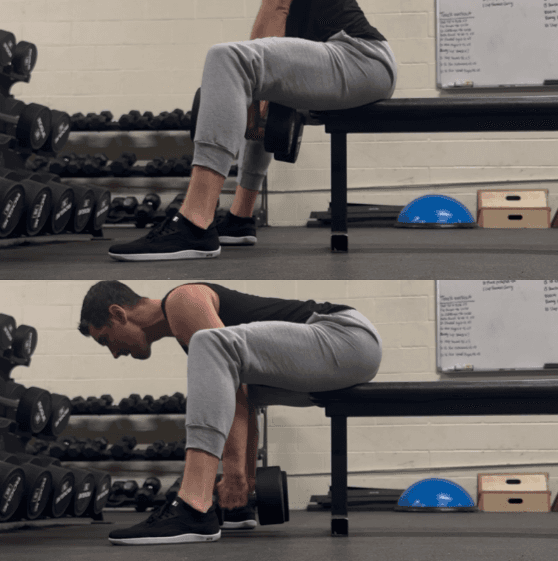
Seated dumbbell deadlifts require only a simple bench and dumbbells. These particularly help your mobility for defense.
Getting good at those first two mobility exercises makes it easier to work on a full side split squat, using a plate for counterbalance (most basketball players will fall backward if not).
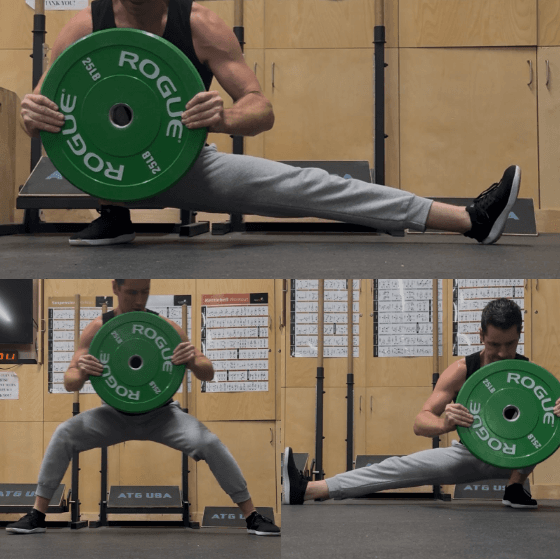
The full side split squat for 20 total reps (10 per side) - trying to stay parallel or lower the entire time - is a long-term mobility cheat code for basketball players.
These 3 exercises can be done in an efficient circuit, again with 2nd or 3rd sets optional based on desire to improve a weak/stiff area.
Workout 4: Upper Body
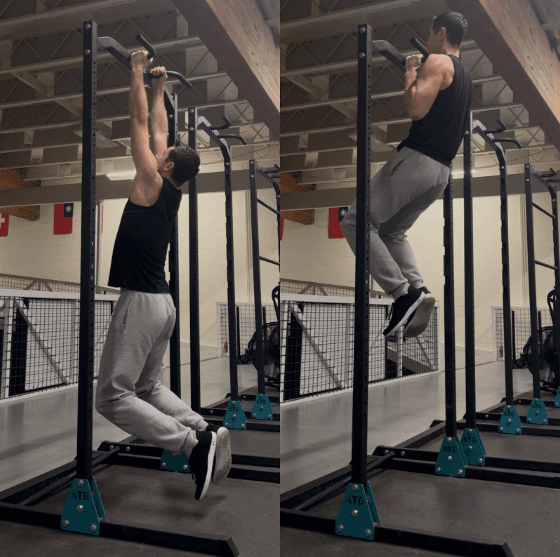
10 full pull-ups is a good baseline upper body strength test for basketball.
(If 1 pull-up isn’t possible, use your legs to assist up, then fight down, while working on the following 3 exercises as well.)
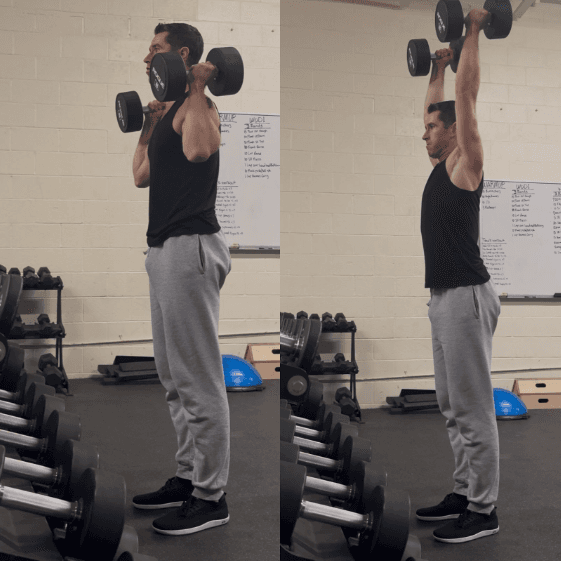
Pressing overhead balances out the pull-up and builds the shoulders, which are particularly helpful for basketball jumping and physical contact.
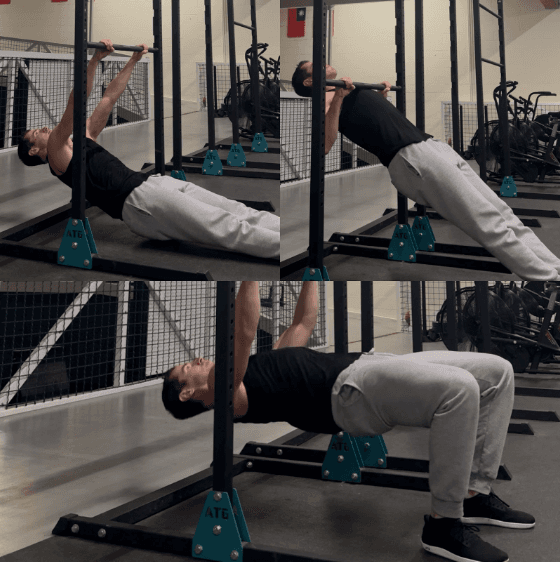
Rows and full push-ups then add further balance.
(Bent knee quickly makes the row easier.)
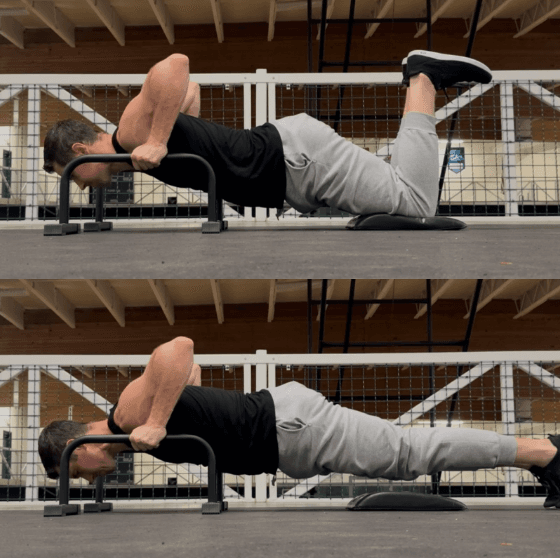
(Bent knee also makes the full push-up easier.)
Those 4 exercises = vertical and horizontal pushing and pulling.
These 4 can also be done in a quick circuit, with 2nd or 3rd sets optional based on personal upper body preferences.
Program List
Workout 1: Rocket Legs
Middle School
No-Bounce Full Squat With Dumbbell: 3 x 6-10
High School (Once you can own 75 pounds for 10 reps in the full dumbbell squat):
No-Bounce Full Squat With Barbell: alternate one week 3 x 6-10 with bar on back, one week 3 x 3-5 with bar on front
No-Bounce Hex Deadlift: alternate one week 3 x 6-10, one week 3 x 3-5
Workout 2: Accessory
Tibialis Rotation: 1-3 x 20
Single-leg Calf Raise: 1-3 x burnout with full pause at bottom of each rep, and full squeeze as high as you can on each rep
Ham roller: 1-3 x 20 on two legs, or 10 on one leg
Slant Step-up: 1-3 x 25
Back Extension: 1-3 x 15
QL (Quadratus Lumborum): 1-3 x 10
Hanging Knee Raise: 1-3 x burnout (20 reps touching knees to triceps is a good baseline goal for basketball!)
Workout 3: Mobility
Full Front Split Squat: 1-3 x 15
Seated Dumbbell Deadlift: 1-3 x 15
OPTIONAL Full Side Split Squat: 1-3 x 10 per side
Workout 4: Upper
Full Pull-up: 1-3 x burnout
Dumbbell Overhead Press: 1-3 x 6-8
Inverted Row: 1-3 x 10
Full Push-up: 1-3 x burnout
As you can see in this article, I have zero secrets, especially when it comes to helping kids.
Beyond this, Hoop Dreams has been added to my app for those of you who would like to ask questions and have your own form videos coached. This requires a lot of labor, but we do so at the lowest price I’ve seen anywhere.
Yours in Solutions,
Ben
ATG Online Coaching (Affordable access to all my programs, with form coaching so you eventually get each movement as I would help you get it in-person.)
Equipment, Shoes, & Shorts (Everything is on sale through the holidays, including our new USA-made gym shorts!)
Sign up for free knowledge
We send out new articles weekly.