9 Recent Coaching Lessons
The entire theory of ATG comes down to Demand v Ability.
Coaching JV and varsity basketball teams this year reminds me of lessons that may be of use to you.
I took each main exercise we’re working on and attached a coaching lesson.
1/9. Every Regression Counts
My purpose is improving the chances of each student winning with fitness for the rest of their lives. The most essential component of that plan is helping them see each exercise as a scalable skill they can use from there on out.
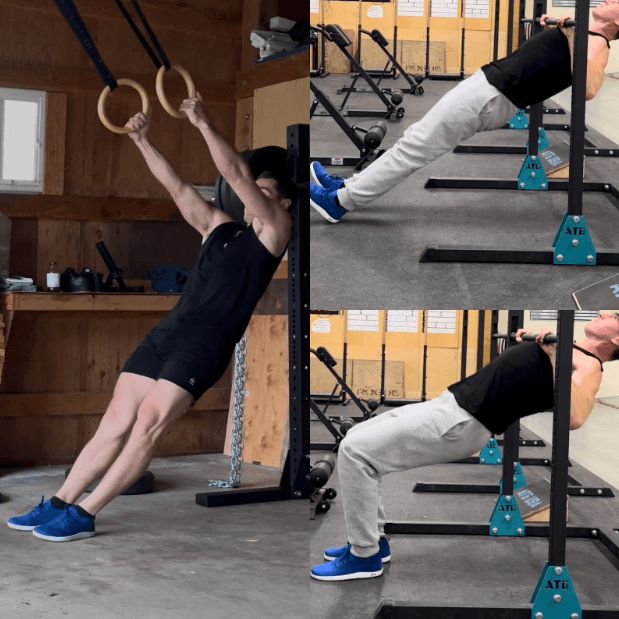
Example: No matter how fit the student, I teach them that the row can scale simply by bending the legs. I also mix in rows with the rings, showing how smoothly it scales by walking back farther.
2/9. Even One Set is a Win
A student came to me and admitted that he skips strength training.
He lacks explosiveness on the court but strength training makes him too sore.
I set up a “program” where he learns one exercise per day with me, and does just one set.
That will make him stronger than none at all.
Since he’s one of the slower players, I picked the hanging knee raise for his first exercise.
I explained how the fastest kid in school (state champion in the 100 meters) could do 20 full reps from day 1 without prior training.
Sure enough, my student was unable to get 1 full rep.
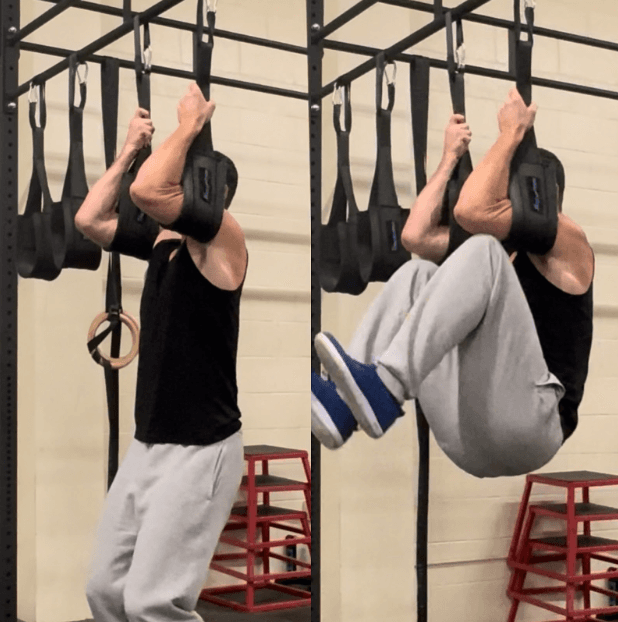
That’s okay. I had him do 10 reps to whatever level he could get his knees, no matter how small.
End of workout.
“Imagine when you can get 1 full rep? Then 5? Your legs will feel lighter to pick up on the court.”
Fast forward just a few days, and the same student let me know he did 2 exercises, 2 sets each, on his own.
This may seem insignificant or even laughable to most strength coaches, but I have no doubt that I’m improving the chances of this student becoming self-driven on his fitness from here on out.
And that’s my purpose.
3/9. Program For The Future
In helping many people age 60+ to a significant reduction of lower back pain, plus increase of function, the two most valuable skills I’ve found for direct low back strengthening are seated dumbbell deadlifts and knowing how to use the back extension machine.
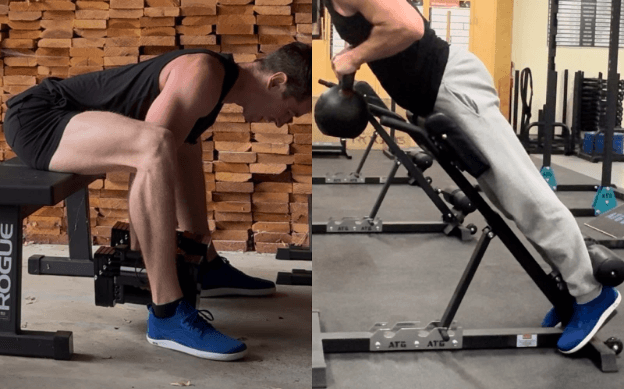
So I don’t teach further deadlifting to students unless those other two exercises are mastered first.
I’m not going to abuse bodies just because they’re young and I can get away with it.
Why not teach the most valuable skills for life before you get hit by adulthood problems?
From lower back pain to financial planning, some adulthood problems have become too obvious, yet receive inadequate Ability development in school, relative to the Demands of life.
The entire theory of ATG comes down to Demand v Ability.
There is no absolute perfection of body or life, but we can become incrediblyskilled at improving the Abilities which will be relied upon.
4/9. Don’t Wait For The Pain
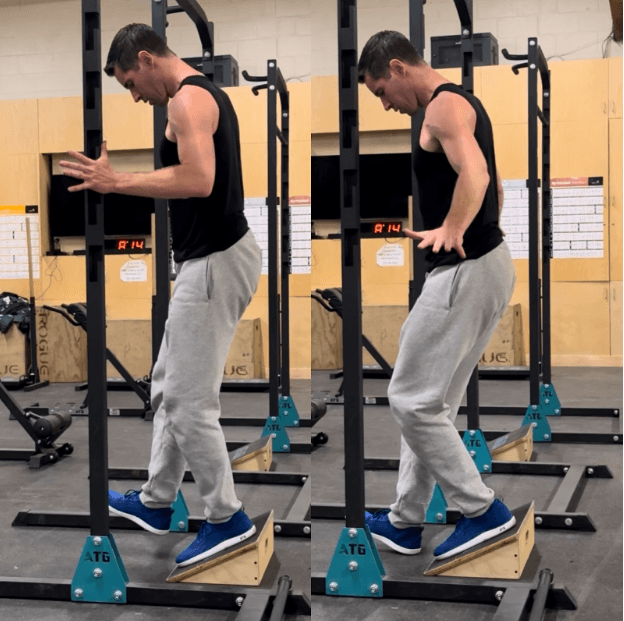
Pain in the front of the knee is so common in volleyball and basketball that it’s called “Jumper’s Knee.”
I’m not going to wait until an athlete has Jumper’s Knee to teach them the most valuable exercise I’ve seen in handling it!
Sports vary in which areas are most likely to break down.
In today’s age of accessible information, it is completely realistic for any coach to gain world-class skill for a given area.
5/9. When in Doubt, Less Reps
One of the most shocking things for me when starting to train young people is how normal it is for them to do slop reps.
They’re so conditioned to be forced through workouts without understanding, willingness, and attention to form that the default for many students is to skate through the reps without performing even a single one with focus on the intended gain.
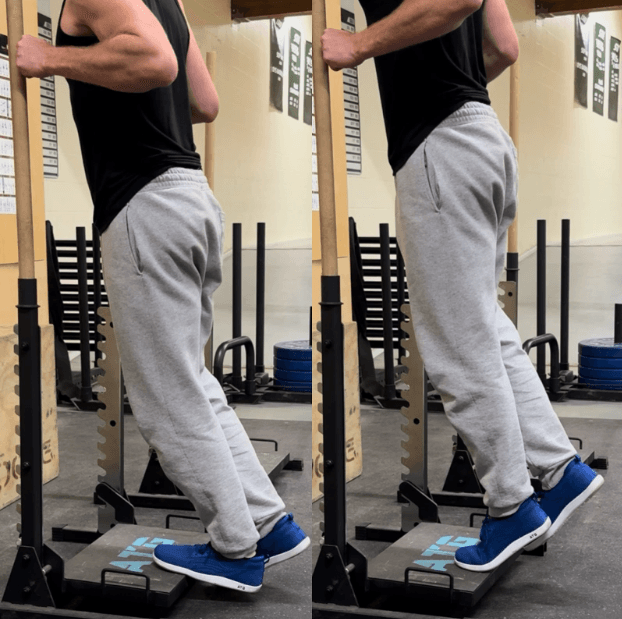
Example: I am using only 5-10 reps on calf raise. This gives the student time to slow down and actually pause at the top and bottom of each rep, thus stimulating the desired effects.
6/9. When in Doubt, Rep Brackets
Example: Using 5-10 reps on a shoulder press rather than just “10.”
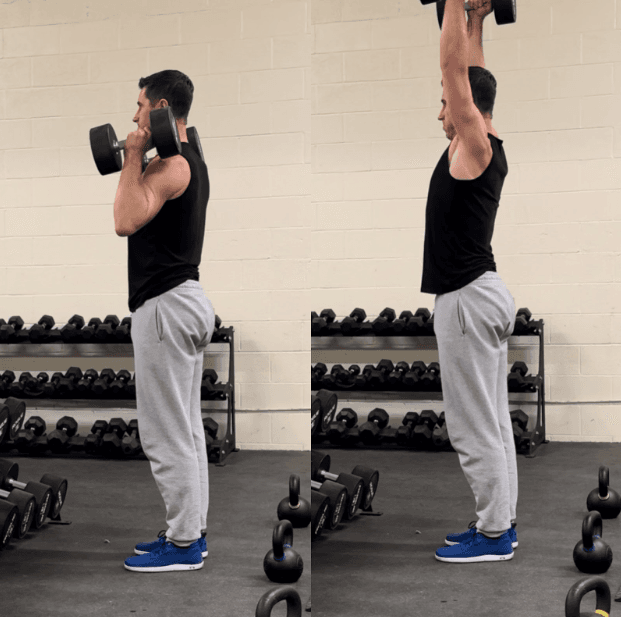
If I tell them “10,” they’re likely to use the same weight all season, or try to go heavier and change form to get the weight up.
“Get 10? Go up in weight.
Get 5 or less? Go down in weight.
In-between? Keep it the same.”
This increases the chances of gain and interest from young trainees.
7/9. Assess The Right Tools For The Job
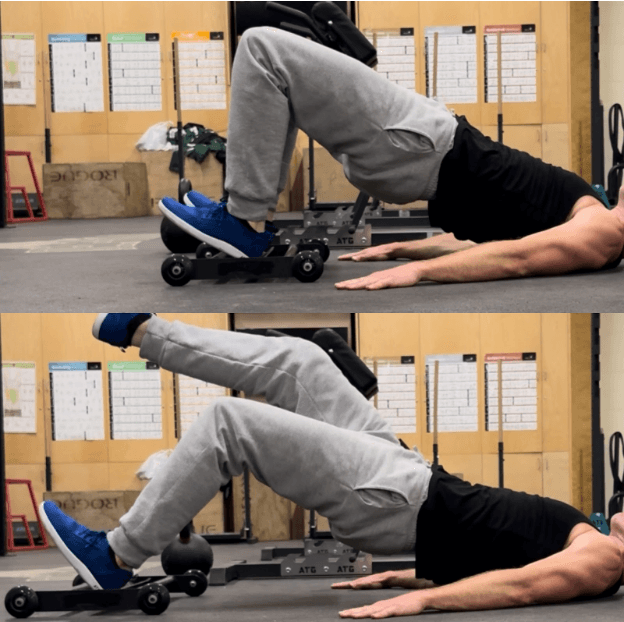
Example: There are many excellent devices for hamstrings training.
I can count 7 different types of hamstring machines I have purchased for gyms I’ve owned!
But for students, I settled on ham rollers because:
-I can stack 10 of them and then easily bring them out for group workouts.
-They allow every student to start with two legs, but progression to one leg challenges even the strongest of them. (If you feel stuck in between those two levels, use two legs up, then fight down with one leg.)
-They help build balance from one side to the other.
8/9. Have Measurable Goals
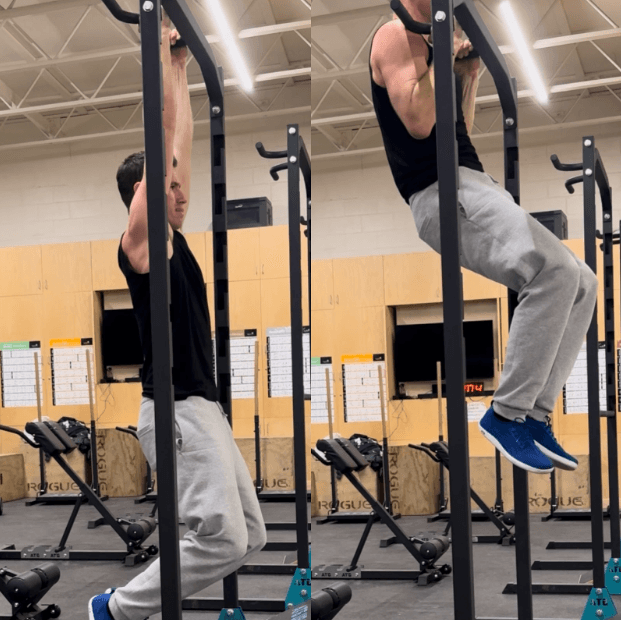
A full pull-up is a good example of something I want to help my students achieve and then keep for life.
I’m a fan of all forms of exercise, but without measurable goals, I see interest fade.
For this reason, almost everything I teach to students is easily measurable.
9/9. Earn Buy-in
Heading into teaching the teams how to full squat, I knew I would have to earn their belief in it, so I joined the varsity B team in a full-court game vs the A team.
I played well, beat the A team, and then gathered both JV and varsity around.
Despite everyone being exhausted, I took one dribble and rose up well above the rim for a two-hand slam.
Most of the varsity team is around my height, but no one can dunk.
[For the record, this school had one serious basketball player. I started working with him 8 months ago. He went from unable to dunk, to now dunking easily. I played one-on-one against him weekly through the off-season. He even beat me one time - but he’s such a smart and hardworking kid, he graduated early at age 17! As a coach, my heart hurt; my heart grew back a size when he decided to be my assistant coach for the season.]
This is not a team of natural basketball athletes, but neither was I!
As someone who finished high school never getting close to dunking, being able to dunk easily now in my mid-30s, with incredible knee protection, is not normal.
The number one reason I can do this is full squats, but less than 1% of basketball teams do full squats.
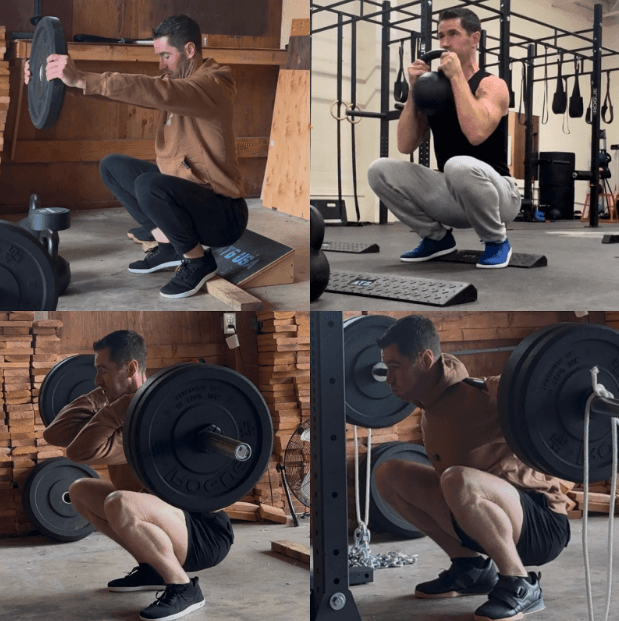
To young basketball players, full squats initially make no sense.
When playing basketball, we almost never bend our legs below about halfway.
That is precisely why the full squat is (in my personal and coaching experience) by far the most important exercise for basketball players.
It supplies additional strength in and around the knees and legs which you do not get from basketball or from exercises which mimic basketball.
I knew, though, that despite recent research showing this, and despite the most physically dominant collegiate basketball team (University of Houston) full squatting for the past 6 years (thanks to my friend, Alan Bishop), I would still have to personally earn buy-in from my players on full squats.
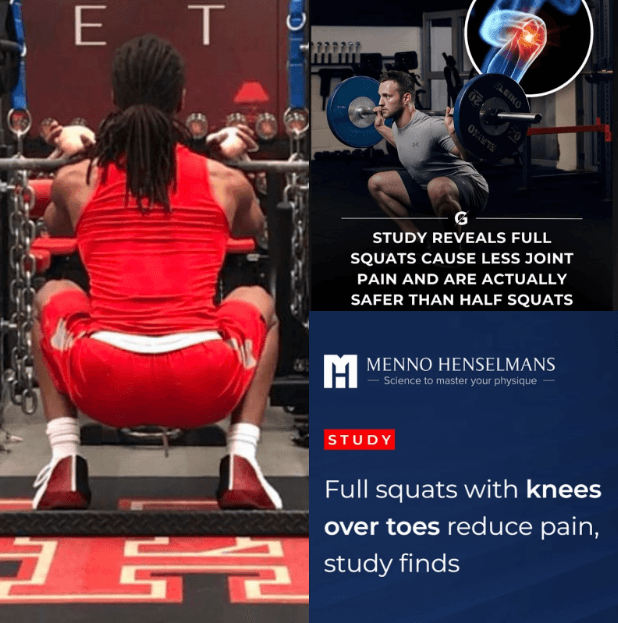
Now they all know how and why to work on full squats, and with their own eyes they’ve seen the results they want.
That’s how I wish I had been treated as a student, so that’s how I now treat my students.
In today’s world, simply treating others as you would’ve wanted to be treated puts you in elite territory in teaching and in business.
Go the distance in this pursuit, and I believe you will have a thrilling life you are proud of.
Hope you had a happy Thanksgiving, and THANK YOU for rocking with my unusual ways.
Yours in Solutions,
Ben
ATG Online Coaching (For form coaching, this program is in the Sports section)
Equipment, Shoes, & Shorts (Everything is on sale for the holidays, including our new USA-made gym shorts!)
Sign up for free knowledge
We send out new articles weekly.